Albanese Defends Bowen Amid Backlash Over Cop31 Collapse
The Prime Minister defended the climate minister after the UN summit in Turkey failed to reach an overarching deal due to disputes over fossil fuel language.
By Naomi Wood ·

Prime Minister Anthony Albanese has moved to defend Energy Minister Chris Bowen following the failure of the United Nations Cop31 climate summit in Turkey. As opposition leaders called for Bowen to resign, Albanese attributed the breakdown in negotiations to the current geopolitical landscape, describing the global environment as one of significant difficulty.
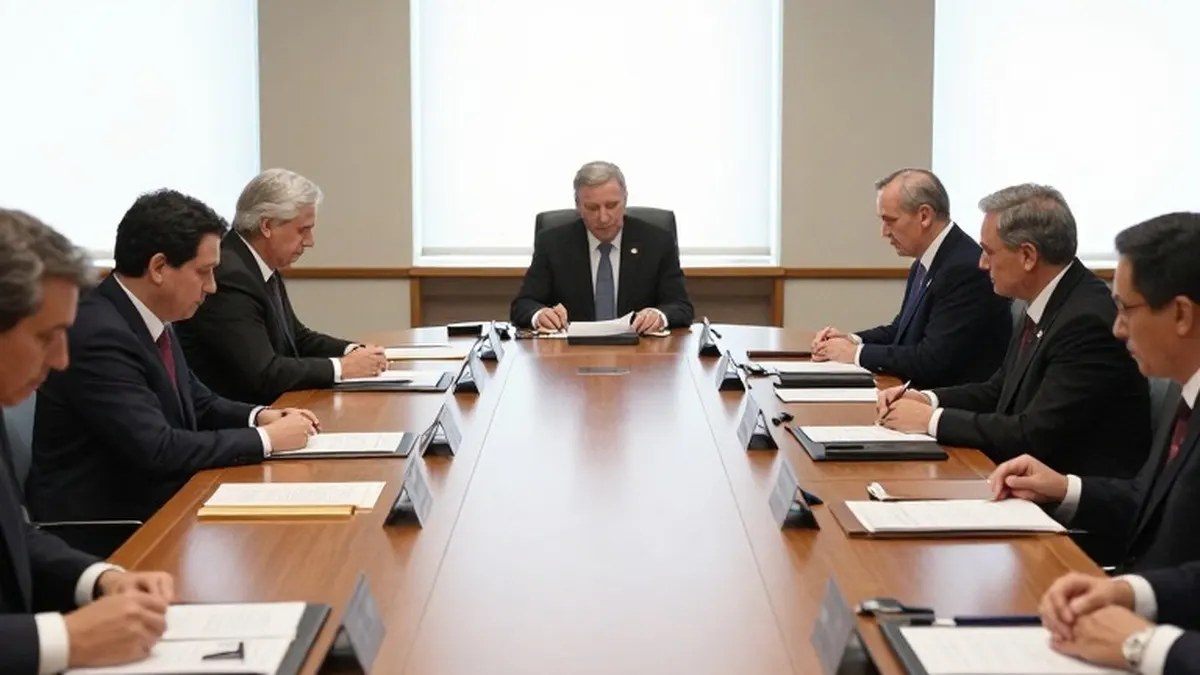
Bowen served as the president of negotiations for the conference, a role he shared with his Turkish counterpart, Murat Kurum. On Sunday evening, after a group of nations rejected the proposed cover decision, Bowen stated that Australia had left nothing on the field. He explained that the red lines his team attempted to bridge between nearly 200 countries proved unbridgeable, leading to the final impasse.
The central point of contention was whether the final agreement would explicitly reference the need to transition away from fossil fuels. A coalition led by the European Union, along with Panama, the Marshall Islands, Vanuatu, Norway, and Belize, indicated they would not accept a deal lacking this specific language. In response, Saudi Arabia and Russia led a bloc of oil-rich nations that vowed to veto any decision mentioning fossil fuels.
Speaking to reporters, Bowen acknowledged that he would have preferred the transition away from fossil fuels to be included in the text but noted it lacked sufficient support. He argued that in the real world, the shift away from fossil fuels is inevitable and accelerating. He highlighted that more than 90 countries had signed a pledge to increase electrification to 35% by 2035, a step intended to reduce fossil fuel consumption, though he admitted the overall result was very disappointing.
Australia faced sharp criticism during the conference for its continued backing of new coal and gas export projects. Addressing this on Monday, Albanese emphasized that Australia’s efforts were crucial in strengthening relationships with Pacific neighbors. He stated that in order to maintain credibility in the Pacific region, action on climate change is the entry fee, and that constructive work with Pacific leaders represented the important outcome of the conference.
The Coalition’s energy spokesperson, Dan Tehan, demanded that Bowen resign immediately, labeling the outcome a catastrophic diplomatic disaster. Tehan argued that as the lead negotiator, Bowen bore personal responsibility for the failure. He suggested that the opposition would not have pursued the hosting of Cop or the newly created presidency role, which Bowen had advocated for after Turkey won the hosting rights following a prolonged standoff.
Steph Hodgins-May, the Greens’ deputy leader, described the failure as a disastrous embarrassment for Australia. In a statement, she claimed that the Labor government was not fit to lead on the world stage for climate negotiations or at home in protecting Australians from climate destruction. She pointed to the chairing of the failed deal as evidence of the government’s shortcomings.
Despite the failure to agree on the Antalya pact, the talks did not collapse entirely, with consensus reached on some minor issues. The sticking point remained the language regarding the transition away from fossil fuels, a concept agreed upon in Dubai in 2023. In the final stages, nations were presented with a text that only referenced the previous decision without explicitly naming fossil fuels, which infuriated many delegates.
Bill Hare, an Australian climate analytics executive and veteran of the conference, argued that the lack of agreement on the main document should not be viewed as a total failure of the Cop process. He described it instead as a successful defense of the UN climate convention’s integrity against a coordinated attack by countries opposed to climate action. He noted that the rejection was particularly targeted at any mention of the need to transition away from fossil fuels.
Amanda Cahill, founder of the Next Economy, was present in Antalya to advise on the just transition guidelines. She noted that while the desired outcome was not achieved, the global commitment to justice and equity was maintained. She added that parties have committed to establishing the Just Transition Mechanism to ensure countries receive the support needed for meaningful climate action. Adam Bandt, former Greens leader, said countries had understandably rejected a pact that failed to mention the main causes of the climate crisis, criticizing the Prime Minister for omitting coal and gas from his speech.