Former Finnish Defense Chief Warns Europe Is in a Gray Zone Between Peace and War
Retired General Jarmo Lindberg argues that recent incidents in the Gulf of Finland demonstrate a dangerous shift in the conflict with Russia, placing Europe in an undefined state of confrontation.
By Victoria Ricci ·
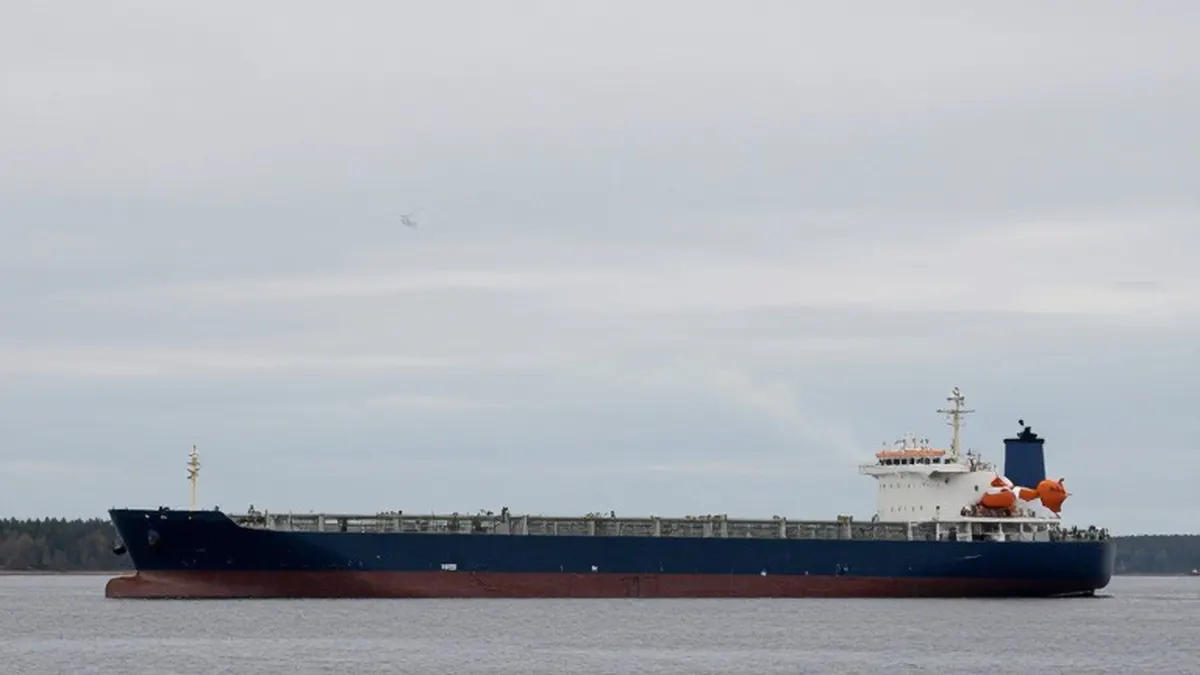
Russia’s ongoing war in Ukraine is increasingly extending into the Gulf of Finland, raising tensions along Europe’s northern flank. On November 21, the Russian cargo ship Sparta II, which is reportedly linked to the Russian Defense Ministry and was heading to Kaliningrad, was struck by drones. The vessel caught fire and subsequently drifted into Finnish territorial waters. Minutes after the incident, a Russian helicopter entered Finnish airspace near the city of Loviisa, prompting concerns about Moscow’s intentions and the potential for further escalation. Finnish Prime Minister Petteri Orpo stated that the conflict in Ukraine is spilling over into Finland’s immediate vicinity.
Jarmo Lindberg, a Finnish member of parliament and retired general who formerly served as the chief of defense, believes these events must be understood within a broader military framework. Re-elected on November 13 as chair of the steering board of the European Center of Excellence for Countering Hybrid Threats, Lindberg warned in an interview with RFE/RL on November 22 that Europe is currently operating in a hazardous space between peace and war.
Lindberg noted that Ukraine has developed the capability to strike smaller and mobile targets located far from its own borders. He pointed out that this represents a significant shift, as previous Ukrainian strikes in the region had primarily targeted static assets such as oil terminals and internet facilities. The attack on the Sparta II marks the second time a vessel has been targeted at a distance. According to available information, the ship was hit by possibly two drones before the fire was extinguished and the vessel began to be towed out of Finnish waters.
Regarding the helicopter incursion, Lindberg suggested that the action was likely a reactive measure rather than a planned provocation. He speculated that Russian authorities may have wished to inspect the condition of the damaged vessel firsthand, as the specific cargo aboard the ship remains unknown. The incident involved cooperation between Finnish, Estonian, and Russian vessels to secure the drifting ship, highlighting the complex dynamics in the region.
The former defense chief also addressed the challenge of attributing various hybrid threats, such as GPS jamming and instrumentalized migration, which are clearly linked to Russia. He referenced recent actions against an Estonian drone factory, which Estonia attributed to the Russian GRU, and the subsequent decision to close Estonia’s eastern border. Lindberg emphasized that while specific red lines are difficult to define, the determination of whether an action constitutes an act of war ultimately rests with national governments and international bodies like NATO.
Lindberg described the current situation as a gray zone, noting that while no formal war has been declared, the peace is no longer absolute. He observed that the definition of war traditionally requires a declaration, which has not occurred, leaving Europe in an intermediate state of conflict.
Looking ahead, Lindberg discussed the military buildup along Finland’s border. He explained that Russia has reactivated the Leningrad Military District and upgraded its brigades into divisions, creating a larger organizational structure than existed prior to the war. Large garrisons east of Finland were deployed to Ukraine early in the conflict, leaving those areas temporarily empty.
He anticipates that Russian formations will eventually return to their original bases, although the timeline could range from two to five years. This potential return underscores the importance of securing a permanent peace. For countries bordering Russia, the question of where Russian forces will be positioned next remains a critical concern for long-term security planning.