Phoenix Heritage Center Opens Virtual Reality Tour of Anne Frank's Secret Annex, With Survivors in Attendance
The Arizona Jewish Historical Society's new immersive exhibit recreates the Amsterdam hiding place as it looked when Anne Frank lived there, and two Holocaust survivors marked the opening by sharing their own stories.
By Juan Gonzalez ·
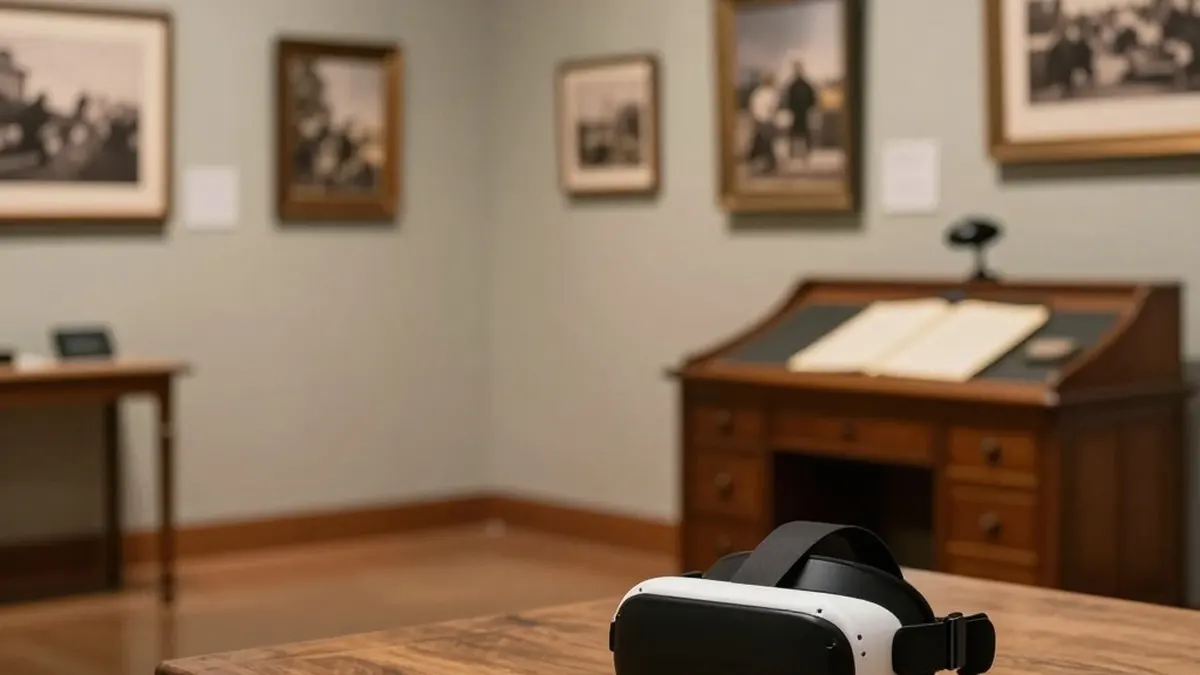
The Arizona Jewish Historical Society has launched a virtual reality experience that leads visitors through the annex where Anne Frank spent two years in hiding during the Holocaust. The exhibit, which opened at the Cutler-Plotkin Jewish Heritage Center in Phoenix, shows the space furnished as it was when she lived there.
Rabbi Jeffrey Schesnol, the center's associate director and curator, said that detail sets the experience apart from the site in Amsterdam. Visitors to the real annex today see rooms that are not decorated as they were in Anne's time. "This is actually exactly what she experienced," he said, adding that users can feel "almost sitting right next to Anne at her desk, writing the diary."
Schesnol described the project as both immersive and important. Pointing to rising antisemitism and racism, he said he believes the world needs to step back and ask, "What are we doing?"
Two Holocaust survivors attended the opening to mark the occasion. One was author Dirk Van Leenen, who said that under Nazi rule, people lost their liberties "in tiny little bites." He argued that remembering what happened is necessary so people can defend against it happening again.
Van Leenen has written several books, including "Resistance on a Bicycle." He said he was sometimes overwhelmed by sorrow while writing but still considers it important to share these stories. His father led the resistance and delivered fake IDs and fake food distribution stamps to hiding places. At roadblocks, Nazi soldiers stopped, searched and questioned him, sometimes roughly, while his son sat on the bicycle.
The boy sometimes helped by creating a diversion. When his father put a hand to his cheek, that was the signal to cry loudly. Soldiers would come over to ask what was wrong, and Van Leenen would say he was hungry, which he was. Sometimes they gave him food. "There was still some human in that soldier," he recalled.
The other survivor, Philip Speyer, was a hidden child who grew up near where Anne Frank did. Holland was invaded on May 10, 1940, and Speyer was born 20 days later. He said laws changed day by day, barring Jewish people from attending school or entering restaurants. His parents went into hiding but were eventually captured. Before that, his mother handed him over a balcony at night to a neighbor.
University students later carried children, Speyer among them, out of Amsterdam by bicycle, each taking a child about 10 kilometers, or a little over six miles. He ended up in an orphanage, where a woman offered to take him home. Her mother, a recent widow with four daughters, feared the risk, saying that if they were caught, they would all die. But after learning his name was Philip, the same as her late husband, the woman took him in. Speyer now calls her his aunt. After the war he was reunited with his mother, the only survivor among her seven brothers, their families, and a sister and her husband.
Speyer said people will take from these stories, including the VR experience, what works for them. His own message was simple: "Be happy" and "Be good to each other." Van Leenen said he was "elated" that the experience had come to Phoenix.
Schesnol said the historical society is still fundraising for a Holocaust education center it hopes to open in Phoenix by 2025. Both survivors stressed kindness and empathy, and the new exhibit offers people who did not live through the Holocaust another way to walk in someone else's shoes.
Source: KJZZ