Burnham's EU Deal Tests UK's Incremental Approach
Andy Burnham's new EU trade deal faces scrutiny in parliament, with analysts suggesting the UK's incremental approach has hit its limits amid shifting European politics and protectionist policies.
By Victoria Ricci ·

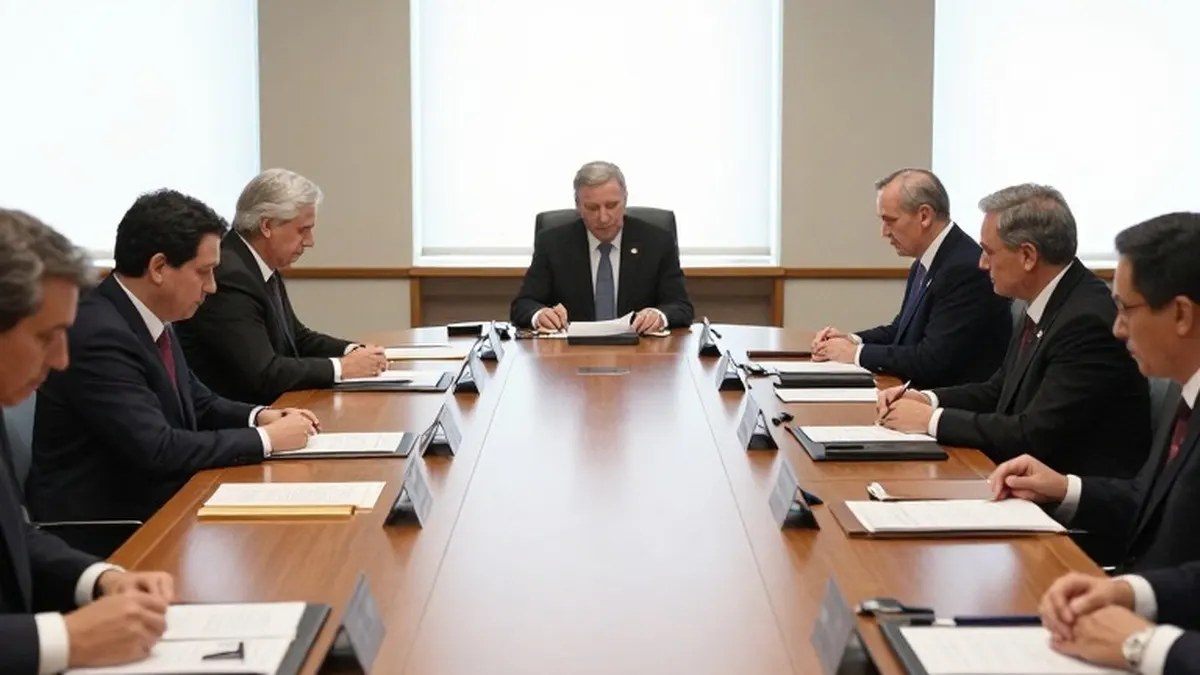
The United Kingdom's new trade agreement with the European Union is set to be scrutinized by parliament this week, as Labour leader Andy Burnham briefs members of parliament on the terms reached in Brussels. While the deal is framed as a reset in relations, critics and analysts suggest it reflects the continuation of Prime Minister Keir Starmer's incremental strategy rather than a decisive victory. The agreements, which cover food and drink, emissions trading, and youth mobility, have not yet been ratified by EU member states.
A significant hurdle remains in the form of a dispute over tuition fees for European students attending British universities. France and Italy have indicated that the deal will not be implemented until this issue is resolved. Although Burnham has stated he is determined to take the UK back into the EU, progress on full reintegration is not expected before the next general election. The current agreement allows British students to work, study, and travel within the EU, with reciprocal access for EU students in Britain.
Mujtaba Rahman, managing director for Europe at the Eurasia Group, notes that the UK has reached the limits of its current negotiating style. He argues that there is little more the UK can do without resembling a state that cherry-picks benefits from the union. This perspective highlights the difficulty of negotiating with a bloc of 27 nations, where internal consensus is required for new agreements.
The political landscape in Europe has shifted significantly since the Brexit vote in 2016. The rise of far-right parties across the continent presents new challenges for any government seeking closer ties with the EU. Although Viktor Orbán was defeated in Hungary earlier this year, far-right parties now govern in Italy and the Czech Republic, with support increasing in Germany and Austria. The outcome of next year's French elections, where Marine Le Pen is currently favored, could further influence the dynamics of European integration.
Le Pen's potential presidency introduces uncertainty. If she pursues a domestic agenda that opposes EU norms, such as reducing the retirement age to 60, it could trigger a crisis that makes the UK's exit seem preferable. Conversely, her stance might embolden other members to seek closer ties with a pro-European Britain. This volatility complicates the case for rejoining, as the UK must navigate a union that is becoming more protectionist and interventionist.
The EU's new Made in Europe strategy exemplifies this shift. By using public funds to support goods produced within the single market, the initiative aims to protect European industries but risks disadvantaging the UK. This is particularly relevant for the British car industry, which relies heavily on European buyers. Rahman points out that the UK lacks a voice in these internal negotiations, making full membership more appealing to ensure influence over policies that affect its economy.
Defence policy offers another strong argument for rejoining. The EU is expanding its role in security through the Safe fund, which offers up to 150 billion euros in loans for defence investments. This move shifts defence from a purely national concern to a broader European governance issue. While Britain has resisted paying the required financial contribution to participate, the evolving geopolitical environment suggests that the EU is increasingly intervening in areas traditionally reserved for nation states.
The relationship between the UK and the US is also under review. European officials are increasingly viewing the US as an unreliable security partner, a perspective not yet fully adopted by UK policymakers. Any campaign for rejoining would need to critically evaluate the special relationship with Washington in light of these changing European attitudes. As the UK prepares for the coming general election, the balance between maintaining autonomy and seeking closer integration with Europe remains a central political debate.