Yashar and Likud resume coalition talks without a breakthrough
Negotiations between Prime Minister Netanyahu's Likud and Gadi Eisenkot's Yashar party continued on Sunday, while Yashar reported significant progress with United Torah Judaism on conscription issues.
By Naomi Wood ·
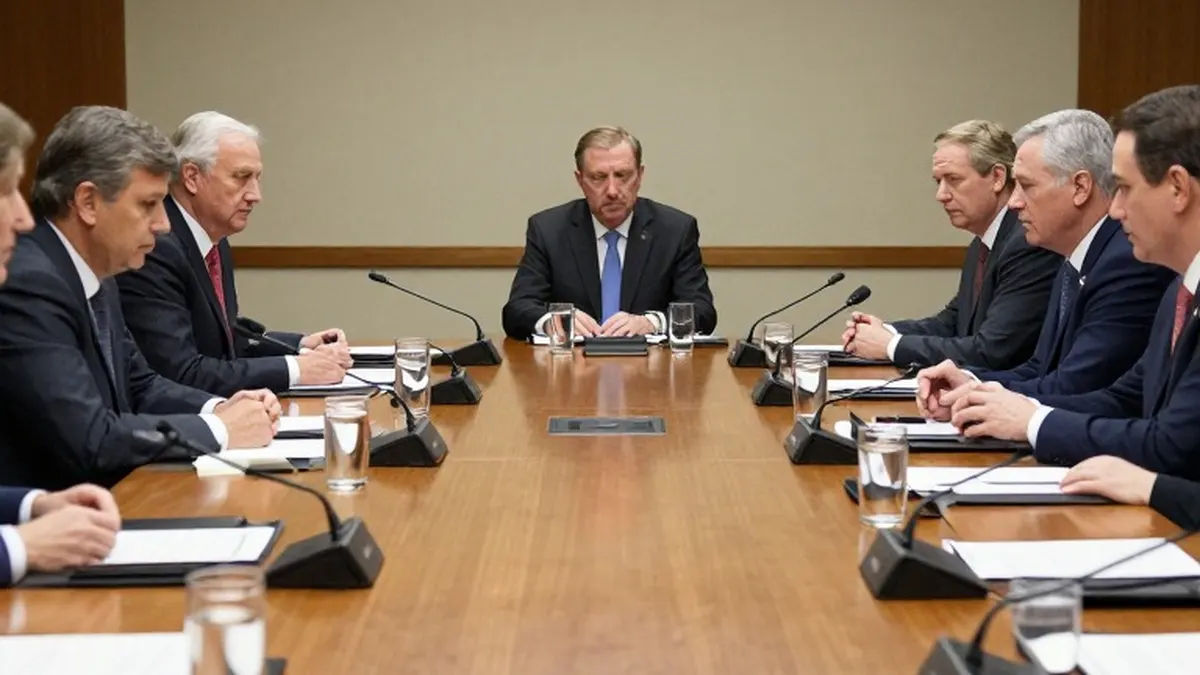
Unity talks between Prime Minister Benjamin Netanyahu's Likud party and MK Gadi Eisenkot's Yashar party resumed on Sunday, but the two sides failed to reach a definitive agreement. The four hour negotiation session took place at a hotel in Herzliya and concluded with a brief joint statement indicating that core issues had been discussed and that the parties would meet again, though no specific date was provided.
Likud was represented at the meeting by MK Ofir Katz, the Knesset faction leader, and Michael Rabello, Netanyahu's long time attorney. The Yashar delegation included MK Chili Tropper, Guy Gutman, Tropper's former chief of staff, and Yoav Horowitz, Netanyahu's former chief of staff who helped found Eisenkot's party. Notably, B'Yachad, whose leader Naftali Bennett supports an Eisenkot led government, was not represented at the Sunday session despite having sent representatives to the previous week's talks.
Hebrew media reports suggest that the Sunday discussions did not address the critical question of who would serve as prime minister or any potential rotation arrangement between Netanyahu and Eisenkot. Instead, negotiators focused on the Likud led judicial overhaul, Haredi enlistment in the military, and the possibility of a commission of inquiry into the Hamas led onslaught of October 7, 2023. No agreements were reached on these matters.
A point of contention emerged regarding the inclusion of National Security Minister Itamar Ben Gvir's Otzma Yehudit in a potential unity government. Yashar reportedly opposed governing with the far right party, while Likud remained non committal on excluding it. Channel 12 and Ynet reported that the sides clashed over this issue during the talks.
Meanwhile, Channel 12 reported that Yashar had made significant progress in separate talks with United Torah Judaism over the past 24 hours. The Ashkenazi Haredi party was part of Netanyahu's previous coalition but refused to endorse him again due to his government's failure to codify a Haredi exemption from military service. Sources in UTJ's non Hasidic Degel HaTorah faction cited positive progress on Haredi enlistment but warned that the sides were still far from exchanging formal proposals.
Eisenkot is expected to present a revised conscription framework this week after Degel HaTorah spiritual leaders rejected his last proposal. That proposal would have exempted three percent of yeshiva students from military service in each conscription cohort. According to Channel 12, UTJ wants trust building legislation on Haredi military service to pass in the Knesset before a government is sworn in. This is politically risky for Eisenkot's bloc, whose four constituent parties campaigned heavily on ending the exemption ahead of the October 27 election.
MK Avigdor Liberman, head of Yisrael Beytenu, has called for painful compromises with the Haredi parties to form a government that can unseat Netanyahu without relying on Arab party support. In contrast, MK Yair Golan, head of the Democrats party, stated in an X post during the Yashar Likud talks that an Arab backed minority government is the only realistic option and must not be ruled out in advance.
Golan highlighted an excellent partnership with MK Mansour Abbas of the Ra'am party and expressed belief that agreements could be reached with the Joint List. He pledged to oppose any attempt at unity with Netanyahu, arguing that such a move would stab his own voters in the back. These comments followed a two hour meeting last week between Bennett and Netanyahu, which reportedly took place without prior notification to fellow party leaders in Eisenkot's bloc.
Golan is the only leader in Eisenkot's bloc who openly backs forming an Arab backed government, while Bennett and Liberman are opposed. Eisenkot himself indicated on Friday that if efforts to form a majority coalition fail, he would move to establish a minority government likely relying on Arab support. President Isaac Herzog gave Eisenkot the mandate to form a government after Yashar received endorsements from its bloc, which controls 48 seats, and the two Arab parties, which control 19 seats. Netanyahu's bloc holds 53 seats, including 13 for the Haredi parties Shas and UTJ.