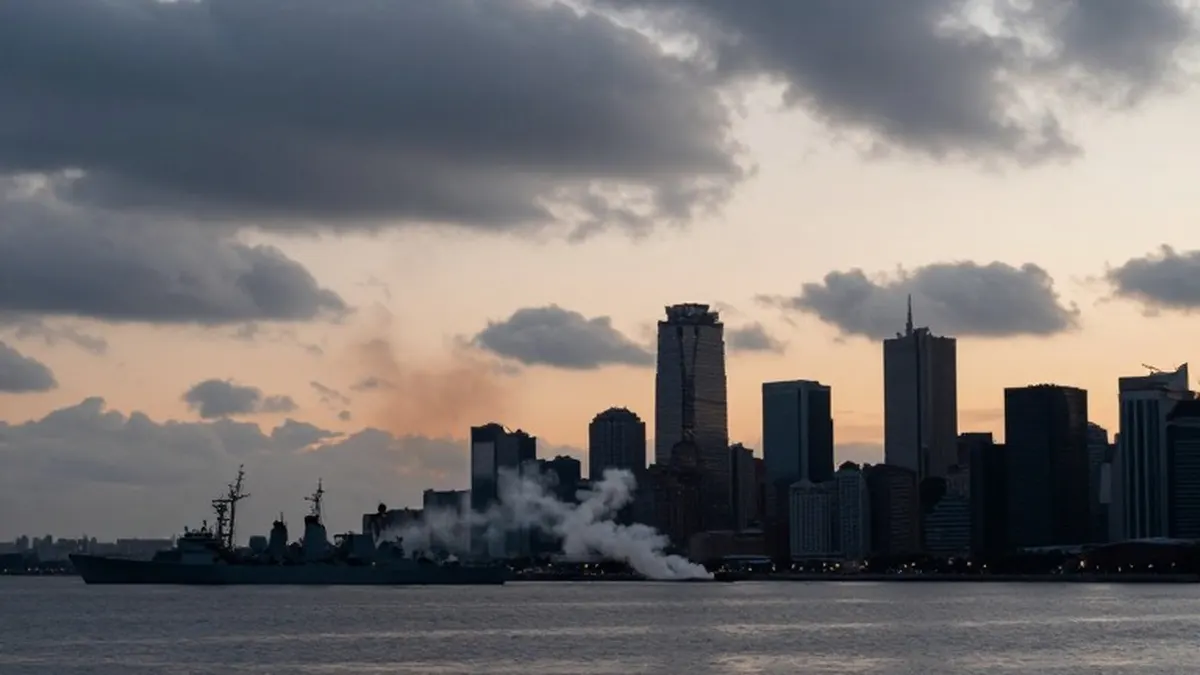
Riyadh Hit: Missile Debris Damages Financial District as Tankers Burn
Saudi Arabia reported a missile strike on its capital while Iran claimed two oil tankers caught fire after hitting mines in the Strait of Hormuz.
By Naomi Wood ·

Debris from a Houthi missile fell on Riyadh on Thursday, striking the city's financial district and damaging the Public Investment Fund Tower, according to the Saudi-led coalition and a witness. The attack marks the latest escalation in the conflict between the Saudi-backed coalition and Yemen's Iran-backed rebels, which has intensified since Iran expanded its strikes on Gulf neighbors on Wednesday.
Residents in the capital heard a loud explosion after receiving warnings of incoming fire. One witness, who spoke on condition of anonymity due to safety concerns, reported visible damage to one of the tallest buildings in the area. The Houthis did not immediately claim responsibility for Thursday's strike, though their media office reported strikes on Sanaa, the rebel-held capital in Yemen, early that morning.
This is not the first time Riyadh's financial center has been targeted this month. Earlier in the month, Saudi officials said missile debris damaged a building owned by the state oil company Aramco. The current barrage follows major airstrikes launched by the kingdom this week against Houthi-controlled territory in Yemen.
The conflict is also disrupting global energy supplies in the Strait of Hormuz. Iran's Revolutionary Guard stated that two supertankers caught fire after striking mines on an unauthorized route in the strait. The tankers were carrying more than 4 million barrels of crude oil and were traveling on the southern side of the waterway under the protection of U.S. fighter jets and surveillance drones, according to a statement on Iran's state broadcaster.
U.S. Central Command did not immediately comment on the incident, and independent verification of the Iranian claims remained pending. Tehran continued to warn vessels not to pass through the strategic lane without approval, stating on Thursday that tankers cooperating with the U.S. military would be dealt with decisively.
Shipping data indicates a sharp decline in crude oil flows through the strait. Preliminary figures from marine data firm Kpler show shipments dropped to 8.5 million barrels per day by Monday, roughly half the prewar levels seen at the start of November. While total oil shipments from the Middle East via all routes amounted to 15 million barrels per day, that figure represents only 64% of prewar flows, down from 97% in October.
Operators are adapting to the danger by using a U.S.-protected route that skirts the coast of Oman. Crews transit the strait at night with radio and mobile signals turned off to avoid detection. They then transfer cargo to waiting tankers in the Gulf of Oman, which ship the oil to Asian customers. This method keeps crude moving but has driven charter rates to record highs.
Despite the disruption, oil prices have fallen following a report from the International Energy Agency on Friday. The agency expects the global market to be oversupplied in the current quarter for the first time since the Iran war began, citing continued Middle East supplies and falling global demand. However, shipments of other energy products, including liquefied natural gas and diesel, remain well below prewar levels.
Saudi officials told allies that the conflict with the Houthis could continue for another six months. The coalition also reported intercepting and destroying missiles in Saudi Arabia's southern region overnight, issuing alerts in several areas to warn of potential threats.