Trump clears last legal hurdle for baseball legend Pete Rose
The move comes one year after Major League Baseball restored the career hits leader's status, clearing a path for future Hall of Fame consideration.
By Beatriz Ricci ·
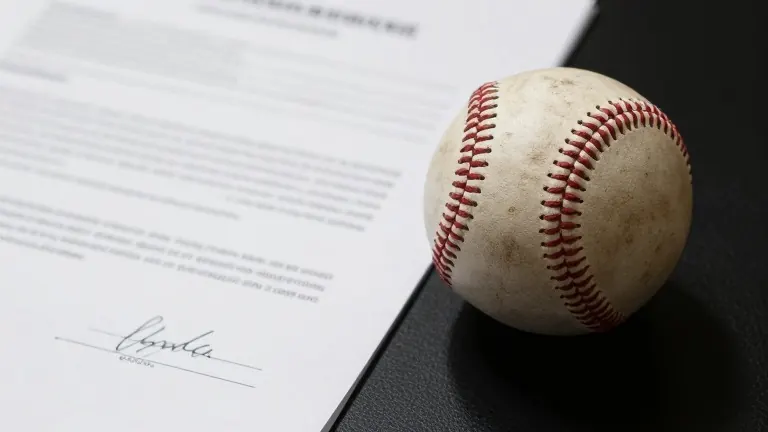
President Donald Trump issued a posthumous pardon to Pete Rose on Thursday, ending the criminal cloud over the late baseball star more than two years after his death. The executive action follows a ruling last May that restored Rose to baseball's records books, officially removing him from the list of players permanently ineligible for the sport.
Trump announced the decision via a social media post, describing Rose as a true baseball superstar and legend. The president stated that he had granted a complete and total pardon to the former Cincinnati Reds manager, who died in 2024. This legal step resolves the final formal obstacle from the tax fraud case that plagued Rose's legacy for decades.
Rose accepted a permanent ban from baseball in August 1989 after investigator John M. Dowd found that the player had bet on the Reds while on the team's payroll from 1985 to 1987. The ban was in place when Rose pleaded guilty on April 20, 1990, to two counts of filing false tax returns. He admitted to failing to report $354,968 in income over a four-year span.
During a live broadcast on WCKY-AM in Cincinnati the night of his plea, Rose said he was not a bad person but acknowledged making mistakes. He noted that the outcome depended on the judge. U.S. District Judge S. Arthur Spiegel later sentenced Rose to five months in prison, a $50,000 fine, and 1,000 hours of community service. Rose served his time at the U.S. Penitentiary Marion Camp in Illinois and was released in January 1991.
The pardon arrives after Major League Baseball Commissioner Rob Manfred issued a sweeping decision in May 2025. Manfred declared that individuals on the permanently ineligible list would have their statuses restored upon death. This ruling affected 17 people, most notably Rose and Shoeless Joe Jackson, who was banned for his role in the 1919 Black Sox scandal.
With their status restored, both men are now eligible for consideration by the National Baseball Hall of Fame. A rule adopted by the Hall's board of directors in 1991 previously barred anyone on the ineligible list from election. Under current timelines, the earliest Rose or Jackson could be inducted is 2028.
Rose finished his playing career in 1986 with 4,256 hits, a record that had stood since Ty Cobb set it in 1928. He was a 17-time All-Star, the 1963 National League Rookie of the Year, the 1973 Most Valuable Player, and the 1975 World Series MVP. He also won three National League batting titles during his tenure with the Reds and the Philadelphia Phillies.
The criminal proceedings concluded with Rose repaying $366,042 to the Internal Revenue Service. Judge Spiegel noted at the sentencing that once Rose completed his sentence and paid his debt to society, he should be accepted as rehabilitated. The posthumous pardon now formally closes the legal chapter of that era, leaving the baseball community to decide his standing among the all-time greats.