
Ukraine Drone Strikes Hit Russian Vessels in Libya and Baltic Sea
Ukrainian drone attacks have damaged a Russian cargo ship in the Baltic Sea and struck a vessel in Libyan waters, prompting international responses and cross-border firefighting efforts.
By Victoria Ricci ·
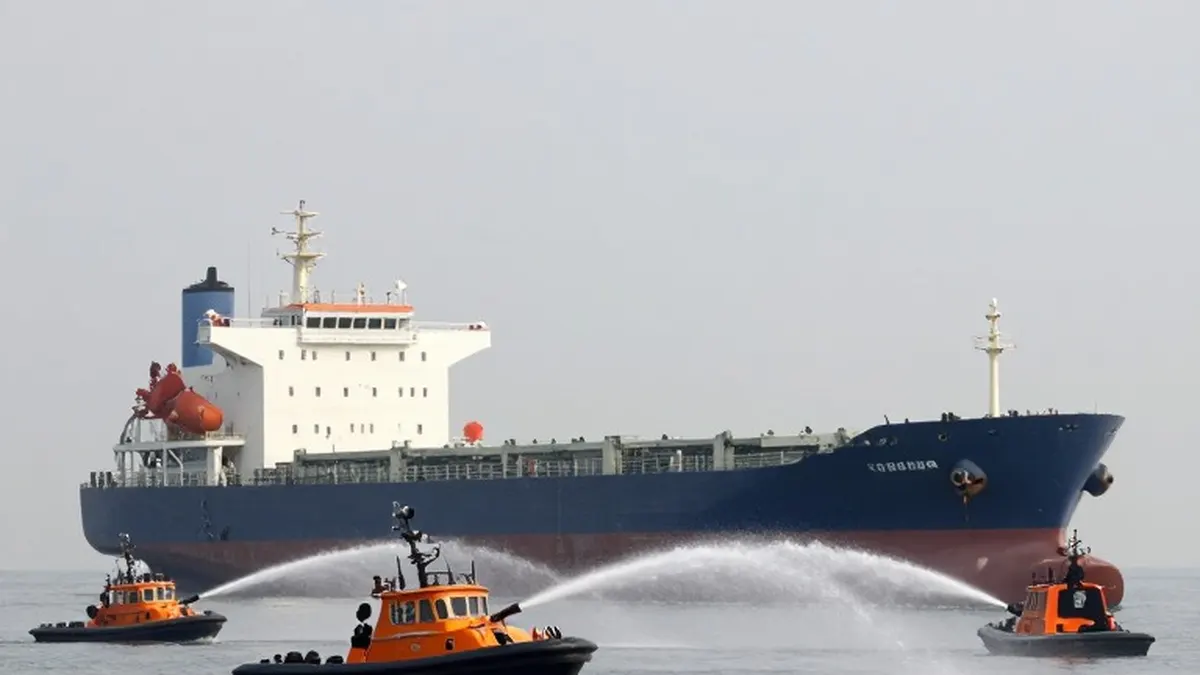
Libya’s eastern-based government reported that a Russian vessel was struck by drones while stopped at Benghazi port. The ship had paused its return journey to Russia to refuel and resupply, operating under maritime cooperation agreements between the two nations. While no deaths were confirmed by medical sources, several injuries were reported, though the exact number and nationalities of the injured remained unknown at the time of the announcement.
The Libyan authorities condemned the incident as a breach of their sovereignty and a danger to maritime safety. They stated that port and naval base facilities, including warehouses, remained safe and that normal operations would resume once the fire was controlled and the site secured. The government declared it would pursue legal and diplomatic measures against those found responsible for the attack.
In a statement, the Libyan government emphasized that it would not permit its territory, ports, or territorial waters to be used as a venue for settling international scores. Russian authorities had not immediately responded to reports of the incident in Libya.
Meanwhile, a separate drone attack occurred in the Baltic Sea, targeting the Russian cargo ship Sparta II. The vessel was struck on Saturday in international waters west of Russia’s Gogland island. The Finnish military indicated that Ukraine was likely responsible for the strike. The ship subsequently drifted into Finnish waters, where it now remains at anchor. All 16 crew members were evacuated to a nearby Russian ship, with one suffering a slight injury.
Firefighting efforts in the Baltic Sea involved a rare display of cross-border collaboration. Emergency services from Finland, Russia, and Estonia worked together to extinguish the blaze. Of the seven vessels assisting, two were Russian, two were Estonian, and the remainder were Finnish. Visible flames were reported as extinguished on Sunday, with operations shifting to cooling the containers and stabilizing the vessel. Preparations were also made for Russian vessels to tow the Sparta II away.
Jukka-Pekka Lumilahti, a sea safety officer for the Finnish Border Guard, noted that smoke and heat continued to emanate from the ship. He warned that weather conditions, including rain, sleet, and stronger winds expected over Sunday night and Monday, posed additional concerns for the ongoing operations.
The Sparta II is a 121-meter Russian-flagged cargo vessel owned by Oboronlogistika, a company that provides logistics services for the Russian Defense Ministry. The ship had departed from St. Petersburg on Friday and was bound for the Russian exclave of Kaliningrad. According to the US Treasury Department, the vessel is subject to US sanctions.
This incident follows a series of Ukrainian drone waves directed at the Leningrad region on Russia’s northwest coast this year. Some drones have strayed into the airspace of neighboring Baltic states, raising fears that the conflict is spilling onto NATO territory. Estonia and Finland, both NATO members and strong supporters of Ukraine, have tightened their borders with Russia in response to security concerns.
Estonian Navy Commander Ivo Vark told public broadcaster ERR that the risk of further attacks in the Gulf of Finland could not be ruled out. Finland’s military also reported detecting a strike on a Russian warship in the same area during recent Ukrainian drone attacks, highlighting the increasing activity in the region.
Finland closed all land border crossings with Russia in 2023. Estonia is set to close its own crossings for six months starting December 1 for security reasons. These moves underscore the heightened tension in the Baltic region as the war continues to impact maritime routes and neighboring countries.