
Ukrainian forces target drone workshop in Rylsk, deny remote mining claims
The 8th Air Assault Corps struck a Russian UAV unit and ammunition depot in Kursk Oblast, countering Moscow's assertion that Ukrainian drones scattered mines in the city center.
By Naomi Wood ·
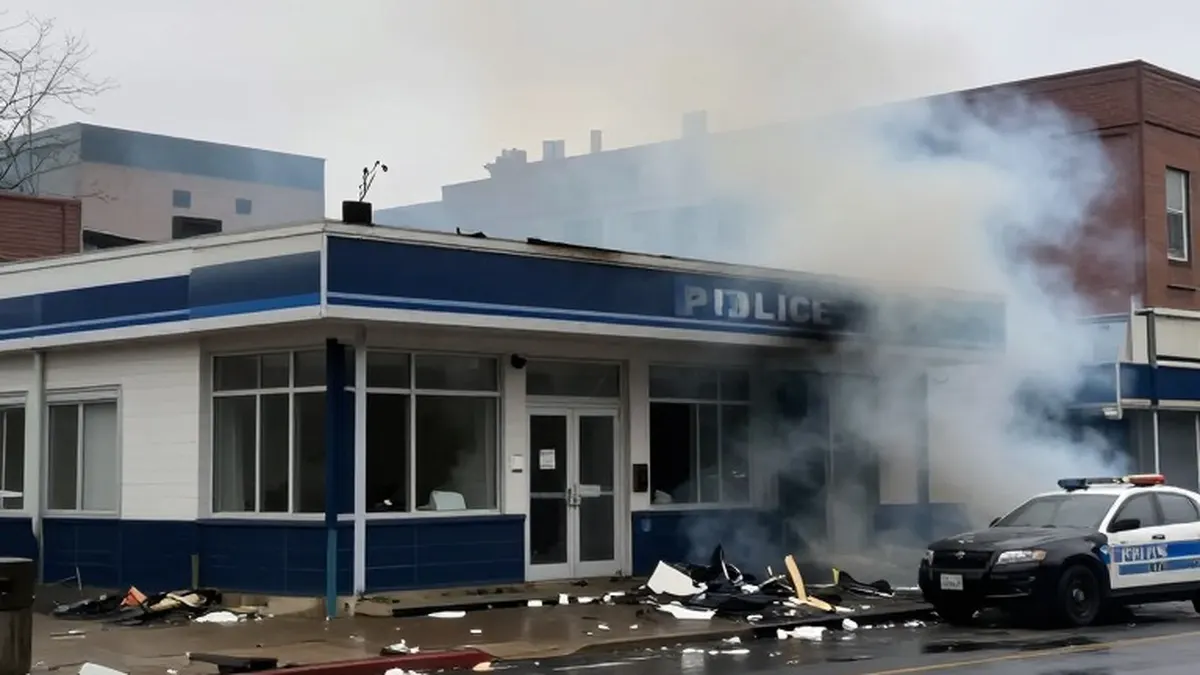
Ukrainian defense forces have officially refuted Russian assertions that they used drones to lay mines remotely in the city of Rylsk, located in Russia's Kursk Oblast. The denial comes from the 8th Air Assault Corps of the Armed Forces of Ukraine, which provided details on recent precision strikes in the area.
Intelligence officers from the 8th Air Assault Corps identified the specific location of the Rubicon S special UAV unit in Rylsk. This Russian unit had established its operational workshop inside a local police station situated in the city center. The decision to house a drone workshop and ammunition depot in such a prominent civilian location drew sharp criticism from Ukrainian command.
Unmanned systems units under the 8th Corps executed precision strikes against the facility. The attacks targeted both the workshop and the accommodation areas used by Rubicon S personnel. Additionally, the strike hit the location where drone pilots from Russia's Federal Security Service, or FSB, were based at the time.
Russian forces had stored a significant amount of ammunition inside the police station, a move that violated standard safety requirements for such facilities. The strikes triggered a series of powerful explosions as the stored ammunition detonated. Ukrainian officials noted that storing explosives in the middle of a city poses a direct threat to civilians, emphasizing that the danger was primarily created by the Russian military's logistical choices.
In the aftermath of the explosions, local Russian authorities launched an information campaign to shift the blame onto Ukraine. Moscow claimed that Ukrainian forces had used drones to scatter mines across central Rylsk, suggesting that the resulting blasts were the result of this remote mining operation rather than a direct strike on a military depot.
The 8th Air Assault Corps responded to these claims with a formal statement. A spokesperson for the unit said, 'The Russians turned a police station in central Rylsk into a drone workshop and ammunition depot. Now they want to shift responsibility for the explosions in the city centre away from themselves.'
The Ukrainian military stated unequivocally that the remote mining theory was another Russian lie. They confirmed that they did not carry out any remote mining operations using drones in the area. Instead, the explosions were caused by the detonation of the ammunition depot housed within the local police station.
This incident highlights the ongoing conflict in the Kursk region, where both sides continue to contest control over key urban and logistical centers. The dispute over the cause of the explosions in Rylsk underscores the importance of verifying battlefield claims, particularly when significant civilian infrastructure is involved.
The 8th Air Assault Corps continues to monitor the area and assess the impact of the strikes. The unit remains focused on targeting Russian unmanned systems infrastructure to reduce the threat posed by enemy drones in the region.
As the situation develops, Ukrainian forces are expected to provide further updates on their operations in Kursk Oblast. The recent events in Rylsk serve as a reminder of the high stakes involved in urban warfare and the critical role of precision strikes in minimizing collateral damage.