US Forest Service Archives Reveal Decades Old Bigfoot Investigation Files
The US Forest Service has released archived documents from the 1980s and 2000s detailing investigations into suspected Bigfoot tracks in Montana and Oregon.
By Naomi Wood ·
Newly released documents from the US Forest Service have brought renewed attention to suspected encounters with Bigfoot in the American West. The agency recently uploaded reports to a public archive concerning alleged sightings and physical traces of the cryptid in Montana and Oregon. These records span several decades, offering a glimpse into how federal officials and local residents have historically approached the mystery of the bipedal ape.
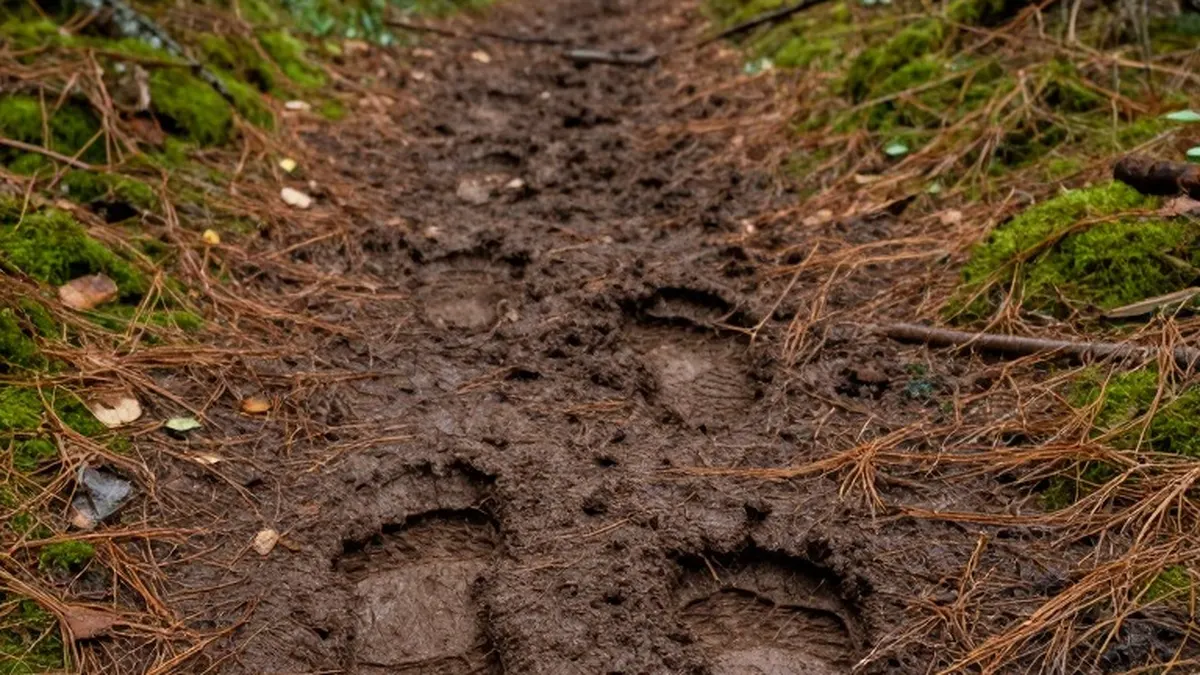
A central piece of the newly available material is a 1982 report detailing an investigation into peculiar tracks found in north east Oregon. Wildlife biologist Rodney Johnson examined footprints at three different locations within the Umatilla National Forest. To preserve evidence, Johnson or a colleague created plaster casts of two of the prints. The investigation was rigorous, with Johnson documenting specific observations about the stride and depth of the tracks.
In his assessment, Johnson listed eight reasons why he believed the tracks did not belong to Sasquatch. He noted that the stride did not adjust to changes in slope and that the prints did not reach the bottom of the mud. Additionally, he observed that the small toes lacked the definite pads at the tips that would be expected from such a creature. Despite these findings, Johnson acknowledged the complexity of the evidence, suggesting that if the tracks were a hoax, the perpetrators had gone to significant lengths to make them appear authentic.
Johnson wrote that the natural appearance of the print marks would have been difficult to duplicate with a simple cast. He speculated that a cast of an actual foot might have been used, yet he noted that other creases in the foot should have shown if that were the case. A subsequent memo from the forest service concluded that the tracks were a very clever attempt to perpetrate a hoax. The investigator stated that the memo would suffice to close the specific Bigfoot case, though other reports continued to surface.
The archive also includes a 2003 article from the Clark Fork Valley Press in Montana. The story described a group of residents who discovered hundreds of strange footprints in the area. One woman quoted in the report said she did not believe in the existence of Bigfoot until she saw the tracks with her own eyes. This account adds to the regional history of reported sightings in the state.
Another document in the collection is a testimonial from Leo Kinney, written in 1980. Kinney described an incident where he and three companions entered the woods to retrieve an elk carcass. Instead, they observed a creature walking on its hind legs. Although they did not have a direct visual sighting, they noted tracks, a strong odor, and a grunting sound. Kinney wrote that the group felt an uneasy sensation and chills as they considered the possibility of the creature having dragged the elk away.
The release of these files follows recent reports from residents in rural Ontario, Canada, who described encounters with massive figures resembling Bigfoot in June. One account described seeing two creatures, one large and one smaller, scavenging through garbage. The smaller creature was noted to have prominent cinnamon coloring. These international reports contribute to a long history of unverified sightings that continue to captivate the public imagination.
The Bigfoot Mapping Project, which collects such reports, currently contains more than 16,000 entries regarding the cryptid. A cryptid is defined as an animal or creature whose existence has not been scientifically proven. Carleton University philosophy professor Josh Redstone previously described Bigfoot as a prime example of how fascinating unverified phenomena can be for humans. He noted that for believers, there is a distinct excitement surrounding the possibility of discovering something new.
While science has yet to confirm the existence of Sasquatch, the continued documentation of these events suggests a persistent interest in the mystery. The US Forest Service files provide a formal record of how such reports have been handled in the past, ranging from detailed forensic analysis to journalistic inquiries. These documents serve as a historical record of the ongoing debate and documentation efforts surrounding one of the world's most famous cryptids.