
Analysis: Why Tarik Skubal's Nine-Year Contract Is a Smart Bet for the Mets
Despite the massive price tag, Tarik Skubal's low workload, elite performance, and historical precedents suggest his nine-year contract is a strong investment for the Mets.
By Victoria Ricci ·
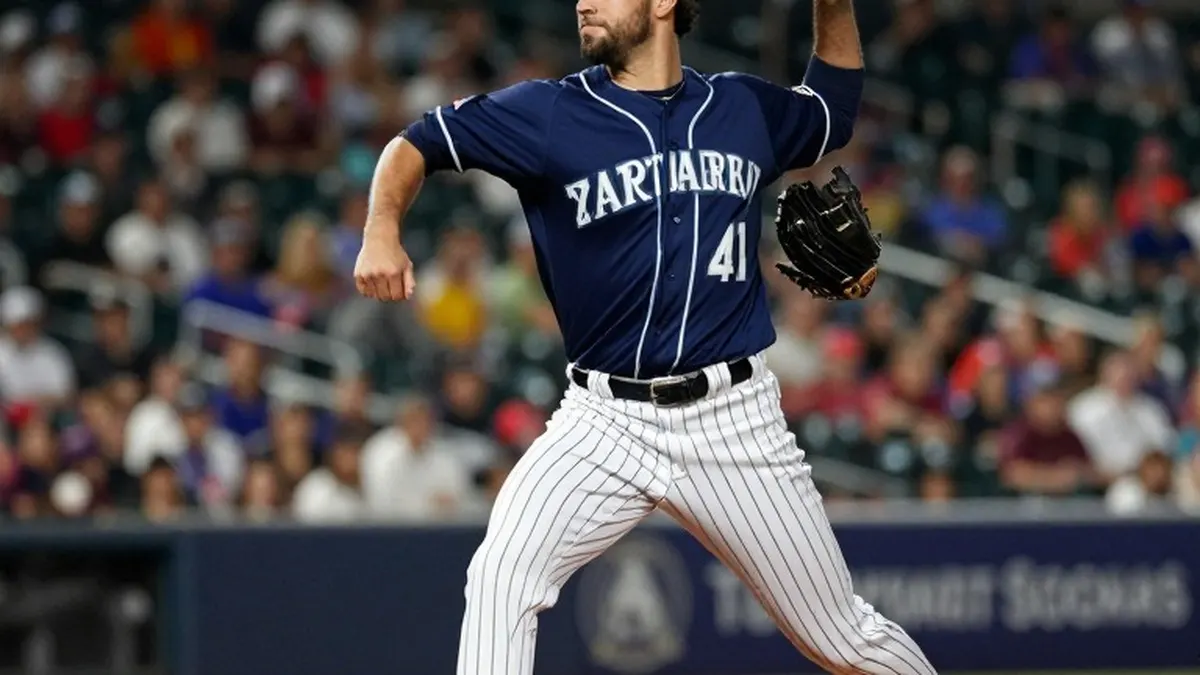
The New York Mets are poised to sign ace left-hander Tarik Skubal to a massive nine-year deal, a move that has sparked debate among baseball observers. While many view the contract size as a significant financial risk, a closer look at Skubal's performance data and career trajectory suggests the investment is far more secure than critics claim.
Skubal has established himself as one of the most dominant pitchers in the sport since returning from surgery in 2023. Across his seasons from age 26 to 29, he made 103 starts, posting a record of 50 wins and 20 losses. His 2.47 ERA, 0.92 WHIP, and 757 strikeouts in 626 one-third innings demonstrate consistent excellence. He rarely walks hitters, allowing only 109 unintentional walks, which equates to just 1.6 per nine innings.
His postseason performance mirrors his regular-season success. In eight playoff starts, Skubal has maintained a 2.13 ERA and a 0.79 WHIP while striking out 70 batters. Although some argue that peers like Paul Skenes or Jacob Misiorowski had superior individual seasons in 2025 and 2026, Skubal’s overall dominance from 2023 to the present is difficult to dispute.
Concerns about age and injury history are also overstated. Skubal enters his age-30 season with only 925 one-third career innings, a relatively low workload for a pitcher of his caliber. For comparison, Justin Verlander had accumulated 1,553 two-thirds innings by the end of his age-29 season. Skubal has previously recovered from Tommy John surgery, flexor tendon surgery, and recent arthroscopic procedures, each time returning to high performance levels. After his latest surgery, he made 19 starts and posted a 2.73 ERA with 141 strikeouts.
Historical data indicates that elite pitchers often age well into their late 30s. Verlander won Cy Young Awards at ages 36 and 39, while Max Scherzer and Chris Sale remained highly productive in their mid-to-late 30s. Other examples include Zack Wheeler, Jacob deGrom, Sonny Gray, and Zack Greinke, all of whom delivered strong performances well into their 30s. Skubal’s contract runs through his age-38 season, a period during which top-tier pitchers have frequently maintained elite status.
The trend of long-term pitcher contracts has also been favorable for teams in recent years. Gerrit Cole’s nine-year deal with the Yankees has seen him win a Cy Young and contribute significantly to a pennant win. Verlander’s decade-long contract with the Tigers yielded two Cy Young Awards, a World Series title, and three pennants. More recently, Max Fried and Yoshinobu Yamamoto have performed to high standards early in their respective deals. Even Corbin Burnes, who missed time to injury, is expected to return to form in his age-32 season.
Financial analysts often use Wins Above Replacement, or WAR, to evaluate player value. Assuming each WAR is worth approximately $8 million, Skubal’s recent output valued him at $48.4 million in 2024, $53.7 million in 2025, and $41.7 million in the most recent season. These figures suggest that the Mets are paying a competitive rate for a pitcher who consistently outperforms market expectations.
While the nine-year, $450 million commitment is substantial, the combination of Skubal’s low innings total, proven durability, and the historical success of similar contracts suggests the Mets are making a calculated and prudent move. Rather than a risky gamble, the deal appears to be a strong value proposition for the franchise.
The signing will solidify the Mets' rotation for nearly a decade, providing stability at the top of the pitching staff. As the team navigates the financial implications, the on-field production Skubal has delivered provides a strong foundation for justifying the long-term investment.
In a free agent market where ace pitchers are scarce, securing a player with Skubal’s pedigree and health profile offers a distinct advantage. The evidence points to a pitcher who is poised to deliver elite performance well into his 30s, making the contract a cornerstone of the Mets' future strategy.
More News · National news · Report a business · Got a Story?