Grameen Bank faces wave of violence as political tensions escalate in Bangladesh
A series of violent attacks on Grameen Bank branches in Bangladesh has intensified political tensions, with the microfinance institution becoming a symbolic target for supporters of the ousted prime minister.
By Naomi Wood ·
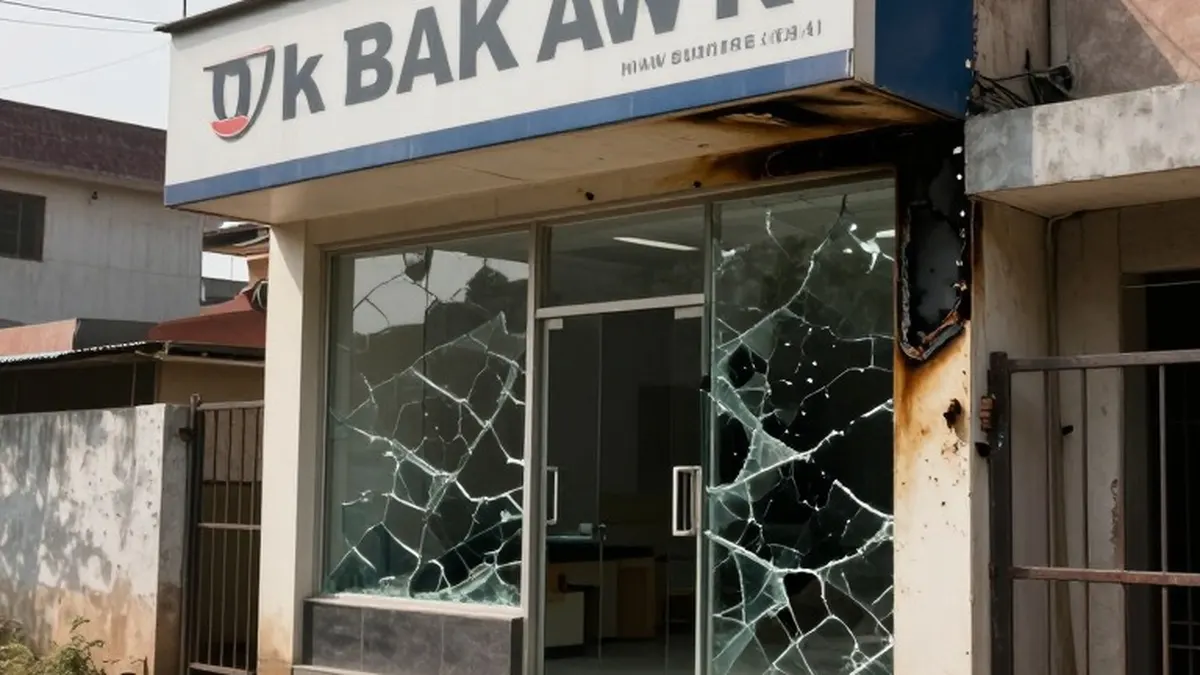
A violent attack on a Grameen Bank branch in the Kashiani area of Gopalganj district has highlighted a growing wave of unrest targeting the prestigious microfinance institution. On the afternoon of November 18, a group of approximately twelve men armed with machetes, petrol, and tools broke into the branch while staff members were on field visits. The assailants looted the premises, attempting to breach the vault with a grinder, and set fire to roughly forty sacks of vouchers and documents. Branch manager Solaiman Morol stated that the attackers claimed the destruction of records would relieve borrowers of their repayment obligations.
The incident was one of 97 attacks recorded on Grameen Bank branches and offices between November 10 and November 23, according to a recent internal memorandum. Videos of the Kashiani attack showed the perpetrators chanting slogans associated with the Awami League, the party of former Prime Minister Sheikh Hasina. They called for the burning of what they described as a den of Muhammad Yunus, the Nobel Prize-winning founder of the bank. Morol noted that the violence has disrupted normal operations and frightened customers, who are now concerned about the safety of their deposits and loan records.
Grameen Bank, which pioneered the concept of microcredit, holds a unique position in Bangladesh’s financial landscape. Approximately 90 percent of the bank is owned by its borrower-members, with the government retaining a 10 percent stake. Managing director Sarder Akhter Hamed reported that the institution serves around 10.6 million members, predominantly rural women. These members have outstanding loans exceeding Tk19,000 crore and hold deposits of approximately Tk25,000 crore. Hamed emphasized that the bank provides essential credit access to individuals whom conventional financial institutions often overlook.
The current wave of violence has placed the bank at the center of Bangladesh’s political tensions. This follows the removal of Sheikh Hasina from power in August 2024 and the subsequent interim leadership of Muhammad Yunus, who recently stepped down as chief adviser. Political analysts suggest that Grameen Bank has become a symbolic target for Awami League supporters who are angry about the party’s ban from electoral politics during Yunus’s tenure. Hasina, who faces a death sentence for massacres against protesters, has recently expressed her intention to return to Bangladesh from exile in India.
Mubashar Hasan, a researcher at Western Sydney University, argued that the timing of the attacks is significant, coinciding with the party’s push for Hasina’s return. He described the bank as an easy symbolic target for Yunus, stating that burning it serves as a way for the party’s hardliners to strike back. Hasan also suggested that the attacks function as a performance of strength, demonstrating that the party maintains a presence on the streets despite its ban. Asif Mohammad Shahan, a professor at the University of Dhaka, viewed the violence as part of a broader strategy of political revenge, intended to provoke a heavy-handed government response that would allow the Awami League to portray itself as a victim.
The ownership structure of the bank makes these attacks particularly damaging to its members. When branches are damaged, the loan files and savings records of poor women who depend on the institution are put at risk. Hasan warned that such disruptions could force borrowers to seek loans from informal lenders, complicating their repayment cycles. In response to the crises, Grameen Bank has suspended the accrual of interest on outstanding loans at branches that are unable to operate. The institution has also increased security measures and relocated staff from high-risk locations.
The repeated attacks have raised questions about the ability of Prime Minister Tarique Rahman’s government to maintain law and order. Ziauddin Ahmed, an additional secretary at the Ministry of Home Affairs, stated that the government is making every effort to maintain stability, although he acknowledged a shortage of police manpower. Eight cases have been filed and eight individuals arrested in connection with the violence. Shahan noted that the government’s response is constrained by the risk of appearing too aggressive, which could fuel the Awami League’s narrative of victimhood.
Bank officials have expressed gratitude for police support, noting that authorities have provided advance warnings in some instances. However, Hamed stated that the bank has largely had to remain vigilant and protect itself. He expressed hope that as the national law-and-order situation improves, customer confidence and trust in the bank will naturally recover.