
US Army to Detonate Unstable Lead Stockpile in Iowa Despite Court Order
The US Army is set to detonate an unstable stockpile of lead azide in Iowa on Monday, proceeding despite a federal court order to pause the permit.
By Victoria Ricci ·
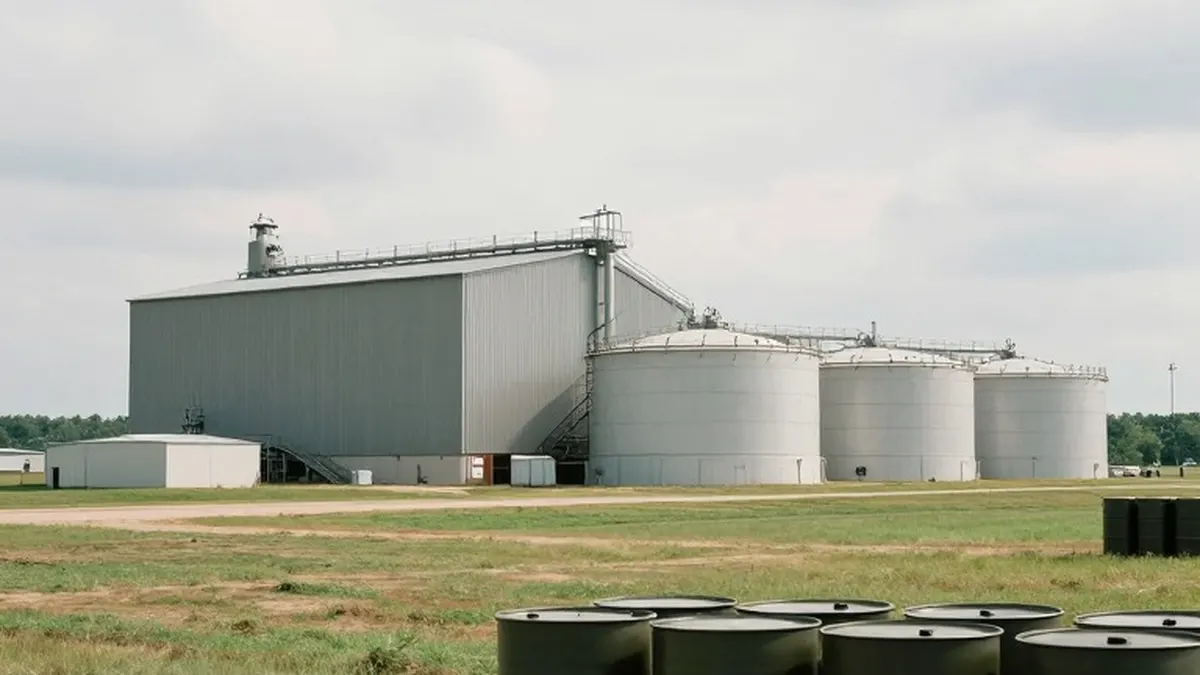
The United States Army is preparing to detonate approximately 4.4 tonnes of lead azide at a military installation in Iowa, a move that proceeds despite a recent order from a federal appeals court to suspend the permit for the explosions. According to a fact sheet released by the Iowa Department of Health and Human Services this weekend, two controlled blasts are scheduled for around noon Eastern Time on Monday, November 23. This timeline follows arguments from the Department of Justice, which maintained that Tuesday represented the final deadline for executing the planned detonation.
Lead azide is a critical component in military ammunition, and the stockpile in question has reportedly become unstable. Lawyers for the Justice Department have warned that sub-freezing temperatures could trigger an uncontrolled explosion. In a court filing, they argued that the choice is not between detonating and not detonating, but rather between a planned, mitigated detonation and an unplanned, unmitigated explosion. However, critics have challenged the Army's rationale for moving forward in the face of the judicial pause.
Thien Chau, a lawyer with the environmental legal group Earthjustice, which represents the plaintiffs in the lawsuit, expressed skepticism about the emergency justification. Chau stated that anyone can claim an emergency to justify actions, and that the public should not automatically accept such claims. She noted that insufficient steps have been taken to mitigate the risks, particularly the release of lead clouds into the air. Experts emphasize that there is no safe level of lead exposure, and the metal is linked to birth defects, brain damage, and infertility.
The upcoming explosions are the result of a tense legal dispute between the US government and environmental organizations, including the Sierra Club and the Iowa Environmental Council. These groups questioned the legality of an emergency permit granted by the Environmental Protection Agency on November 13, which authorized the detonations originally scheduled for November 20. Plaintiffs argued that nearby residents received only one week's notice and that lead dust could travel up to 100 miles. They also contended that the EPA failed to adequately assess safer disposal alternatives.
While the US Court of Appeals for the Eighth Circuit granted a pause on Friday, the Justice Department filed a document on Saturday asserting that the Army could proceed under an emergency exemption. The department claimed this exception was independent of the emergency permit and thus unaffected by the court's administrative stay. Earthjustice countered that this approach effectively bypasses judicial review. In a Friday filing, lawyer Rachel Rintelmann wrote that government lawyers had laid the groundwork for a detonation without a proper permit.
The controversy centers on a deteriorating stockpile at the Iowa Army Ammunition Plant near Middletown. The site contains roughly 9,700 pounds of lead azide across 68 barrels, with lead comprising about 6,900 pounds of the chemical mass. The explosives were stored in a mixture of water and ethanol to maintain stability, but technicians discovered in March that this system was failing. An Army munitions expert found that the liquid had evaporated, causing needle-shaped crystals to form. This recrystallization increases the risk of spontaneous explosion due to temperature changes or friction, making it unsafe to open the barrels.
Earthjustice questioned how the problem developed, stating in a Sunday release that the emergency was of the Army's own making. The group noted the lack of public details regarding why the lead azide was not disposed of before reaching such a dangerous state. The Army has stated that it explored alternatives, including chemically neutralizing the explosives or transporting them to an on-site detonation facility. Both options were rejected due to the risk of accidental detonation during handling or transport. Burying the drums was also deemed risky because jolts could trigger an unintended explosion.
To address health concerns, the Army released two plume maps on November 15, outlining the potential spread of lead contamination across eastern Iowa. One map shows a potential northward drift over communities such as Burlington, Muscatine, Davenport, Iowa City, and Cedar Rapids. The second map highlights surface exposure, where heavier lead-bearing particles would land on outdoor furniture, cars, soil, and crops. Residents in the projected path were advised to shelter indoors with pets, close windows, and limit outdoor air exposure until an all-clear is issued. Those living near Middletown City Park and Butterfly Park were instructed to leave their homes for six hours to avoid ground vibrations that could shatter windows.
Following the detonation, residents are expected to hose down outdoor surfaces, vehicles, and play equipment to remove deposited lead dust. However, experts have raised doubts about the practicality of this guidance. David Cwiertny, a professor at the University of Iowa, warned that long-term monitoring is necessary to track lead distribution. He noted that unlike a patio table, it is difficult to clean farm fields and topsoil. He emphasized the need for actual field samples after the event to measure lead settlement and its impact on land and crops.
The Army has not yet issued revised instructions or specified new evacuation hours following the delay. Earthjustice lawyers argue that the lack of communication is a significant issue, with Chau describing the notification process as extremely concerning. US Representative Eric Sorensen, a meteorologist, suggested that the Army should wait for optimal weather conditions, such as cloud inversion and light winds, to minimize off-site exposure. He questioned why the detonations were announced only when cold weather was imminent. Bruce Lanphear, a professor at Simon Fraser University, added that the Army bears the burden of demonstrating that this is the least harmful option, not just the fastest way to eliminate danger.