
Recruitment struggles threaten the future of school crossing patrols
Local councils across the UK are struggling to recruit school crossing patrol officers, leading to concerns that the familiar figures may disappear as authorities seek cost-saving alternatives.
By Victoria Ricci ·
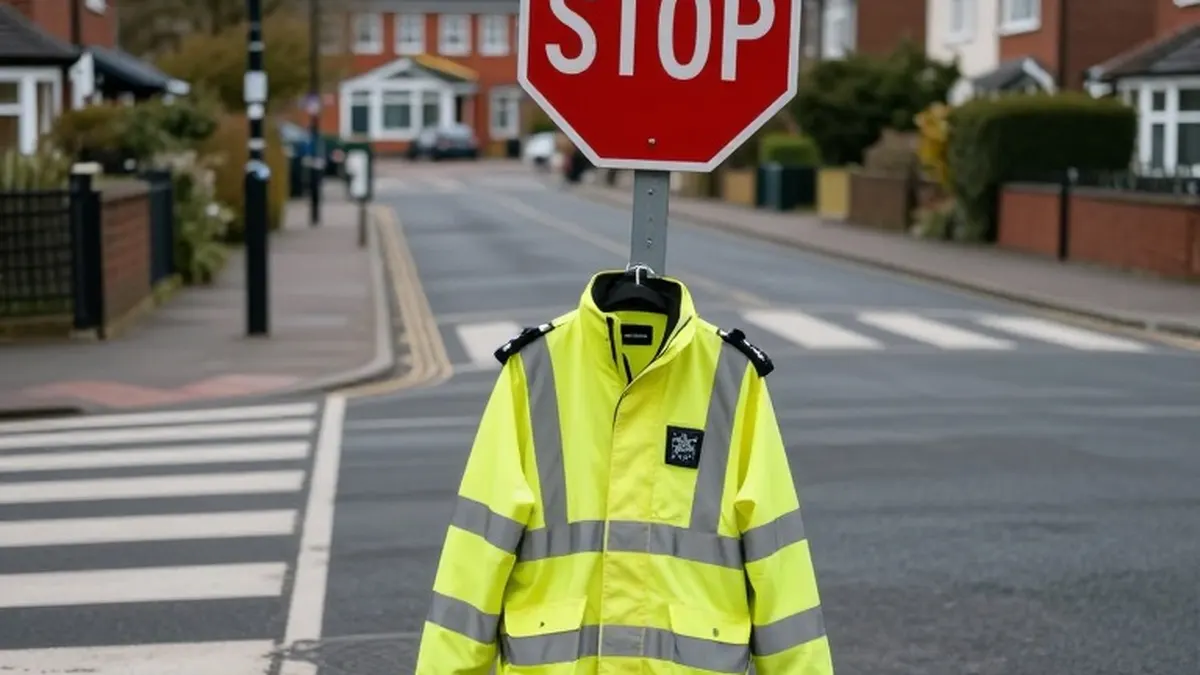
The familiar figure of the school crossing patrol officer, easily identified by their yellow high-visibility uniform and round stop sign, is facing a significant decline across the United Kingdom. A combination of reduced staffing budgets at local authorities and difficulty in finding new applicants is raising concerns that these roles, a staple of British school life for decades, may soon become a thing of the past.
The Recruitment and Employment Confederation reported that school crossing patrols are experiencing one of the largest increases in job vacancies in recent weeks. This trend mirrors shortages in other sectors, such as sales positions and exam invigilator roles. Unlike some other public services, there is no legal requirement for local councils to fill these specific positions, leaving many communities without dedicated traffic supervision during school hours.
In East Riding of Yorkshire, local officials announced last week that approximately one quarter of their school crossing sites are currently unstaffed. The council noted that the number of applicants is dwindling, with some positions remaining vacant for extended periods after previous staff members retired. In response to these challenges, the authority is exploring long-term alternatives for certain locations, including infrastructure changes such as the installation of zebra crossings.
Parents and carers in the town of Hessle expressed concern to the BBC, describing unstaffed crossings as unsafe for children. A council spokesperson acknowledged that the role may be less attractive to potential candidates in the current economic climate. The job typically involves limited working hours during school days, relatively low pay for short morning and afternoon shifts, and the necessity of working outdoors in all weather conditions. The restricted schedule can also limit what applicants can do with the rest of their day.
Similar difficulties have been reported in other regions. Alec Brown, the leader of Redcar and Cleveland council, stated in March that maintaining a full roster is challenging because there is no large pool of ready-made candidates. A spokesperson for the borough council added that while they receive a reasonable number of applications, the part-time nature of the work is a primary barrier. At the time of the report, three applicants were undergoing the recruitment process, which would leave only one vacancy once appointed.
Tom Hayes, the MP for Bournemouth East, has been campaigning to preserve these local patrols. He argued that the potential loss of lollipop people signals a broader societal shift, where small community touchpoints that create social glue are being eroded. He suggested that these roles provide more than just road safety; they offer a vital point of human contact in an increasingly isolated world.
The challenges of the job have also been compounded by an increase in aggressive and dangerous driving, which has led some councils to equip officers with body cameras. Despite these difficulties, some individuals find the role deeply rewarding. Ally Mitchell, a former video games industry employee who moved to Edinburgh, took the job as a stopgap but remained because he valued his role as a trusted community member. He emphasized that while road markings or traffic lights can be installed, they cannot replace the personal connection of an officer who knows the children by name.
Data obtained by the GMB trade union through freedom of information requests highlights a long-term downward trend. The number of school crossing patrol officers in England, Scotland, and Wales dropped by 2,081 over a ten year period, falling from 7,128 in 2009-10 to 5,047 in 2017-18. In some areas, councils are actively removing the positions to save money. Durham council, for instance, scrapped vacant guard posts last year, citing that the roles had been empty for a prolonged period without incident.
In Bournemouth, Christchurch, and Poole, planned cuts to patrol services were postponed earlier this year following a successful local campaign. The council had initially decided in 2024 to upgrade sites with permanent crossings. A spokesperson for that council explained that while the loss of a familiar community face is unfortunate, permanent crossings provide a reliable safety facility available 24 hours a day, seven days a week, for the benefit of both schoolchildren and the wider public.
Hayes concluded that the issue is part of a larger pattern of losing small but important social connections, such as librarians, Sure Start center workers, and community playgrounds. He warned that chipping away at these points in the name of efficiency or savings undermines the fabric of society and makes it harder for people to feel connected to one another.