Bangladesh deploys troops amid violent protests over Hasina's return
Paramilitary forces have been deployed to manage a wave of violence in Bangladesh following the government's rejection of Sheikh Hasina's request to return to the country.
By Beatriz Ricci ·
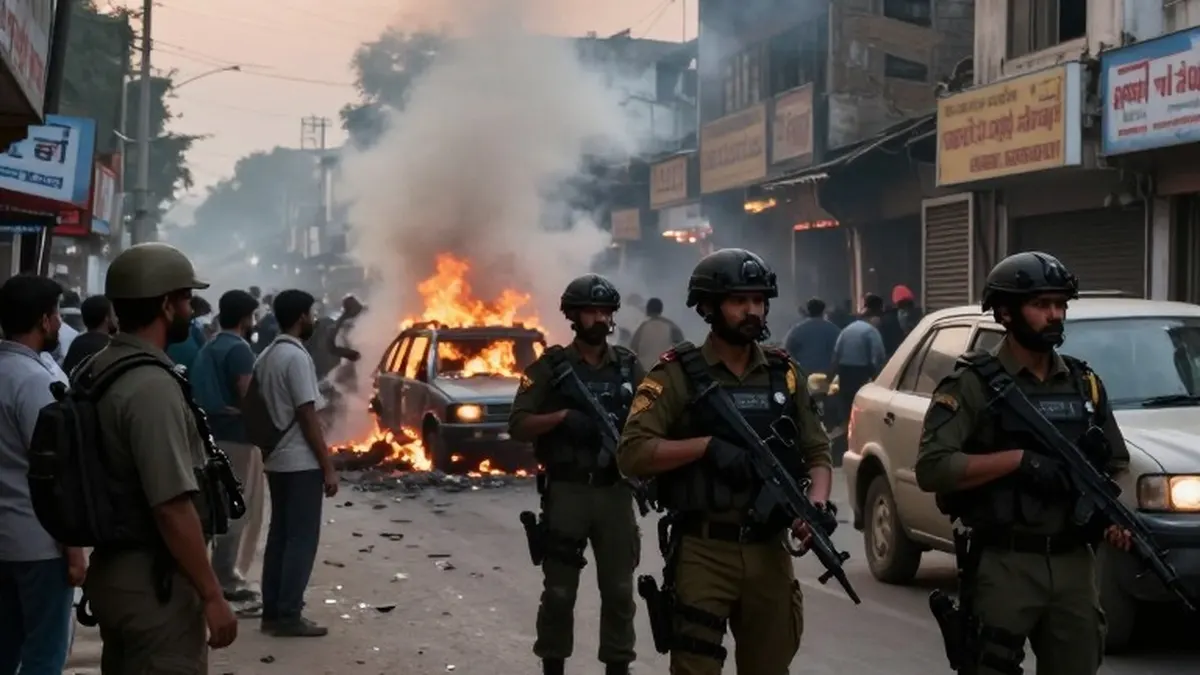
Bangladesh has moved paramilitary troops to contain a surge in violence that began after supporters of former Prime Minister Sheikh Hasina protested against the government's decision to deny her planned return. The unrest has resulted in at least four deaths and widespread attacks on infrastructure, including police stations, banks, and the ancestral home of Nobel Peace Prize winner Muhammad Yunus.
The clashes started after supporters of Hasina's banned Awami League party took to the streets for weeklong demonstrations. These protests coincided with the anniversary of Hasina's death sentence, which was handed down in absentia by the International Crimes Tribunal for crimes against humanity linked to the 2024 student-led uprising.
Hasina, who has lived in self-imposed exile in India since fleeing the country in August 2024, recently requested a new passport and identity card to facilitate her return. However, Prime Minister Tarique Rahman's administration argues that she is a convicted criminal who can only reenter Bangladesh through the existing extradition treaty with India. Rahman has publicly blamed India for the instability, stating that the neighboring country is acting as a master to those in exile and is conspiring against Bangladesh's interests.
Since mid-November, arson and violence have been reported across 28 districts. Local media and the AFP news agency reported that three political activists and a bus worker were killed in the violence. In the Narail district, two members of the ruling Bangladesh Nationalist Party were killed, prompting retaliatory attacks on the homes of Awami League supporters. One resident described the fear in the community, noting that families were instructed to stay indoors unless absolutely necessary.
Late last week, police confirmed that the ancestral home of Yunus in Chittagong was set on fire. The police spokesman stated that no casualties resulted from the blaze, which targeted a storeroom on the eastern side of the property. Grameen Bank, founded by Yunus, reported that 22 of its branches had also been subjected to arson attacks.
Analysts suggest the protests may not be entirely spontaneous. Khandakar Tahmid Rejwan, a lecturer at the Independent University, Bangladesh, noted that the unrest is concentrated in traditional Awami League strongholds such as Gopalganj, Faridpur, and Madaripur. He argued that the lack of broad public mobilization across the country indicates localized unrest rather than a nationwide movement capable of challenging the incumbent government's position.
The government's rejection of Hasina's passport request on November 9 triggered the current wave of demonstrations. State Minister for Foreign Affairs Humaiun Kobir said that Bangladesh does not issue passports to those it considers terrorists who kill thousands and flee. He emphasized that the country would pursue extradition arrangements with India to bring Hasina back. The prosecutor who secured her death sentence stated that she must face execution upon her return.
Hasina has denied the charges and told Reuters that she intends to return to surrender before a court. Some analysts question whether she genuinely plans to face the law or if she is using the promise of a return to revive her political fortunes from exile. Others point to ongoing discussions in New Delhi about negotiating a safe return for Hasina, possibly under the protection of the Bangladesh Army.
Mushfiqul Fazal Ansarey, a senior Bangladeshi diplomat, assessed that Hasina's talk of a comeback is intended to rally supporters and destabilize the country. He noted that the violence has extended abroad, with Awami League supporters reportedly attacking the entourage of MP Nahid Islam in east London. Ansarey urged the neighboring country to ensure its territory is not used to incite violence.
In an effort to build political unity, Prime Minister Rahman has held talks with Shafiqur Rahman, the leader of the opposition party Jamaat-e-Islami. The two leaders viewed the meeting positively and hoped it would strengthen democracy. Analysts warn that a convergence of interests between the BNP and Jamaat-e-Islami could be a significant challenge for the Awami League, as both parties possess strong grassroots organizational structures capable of countering the former ruling party's networks.